How to talk to a parent about giving up driving
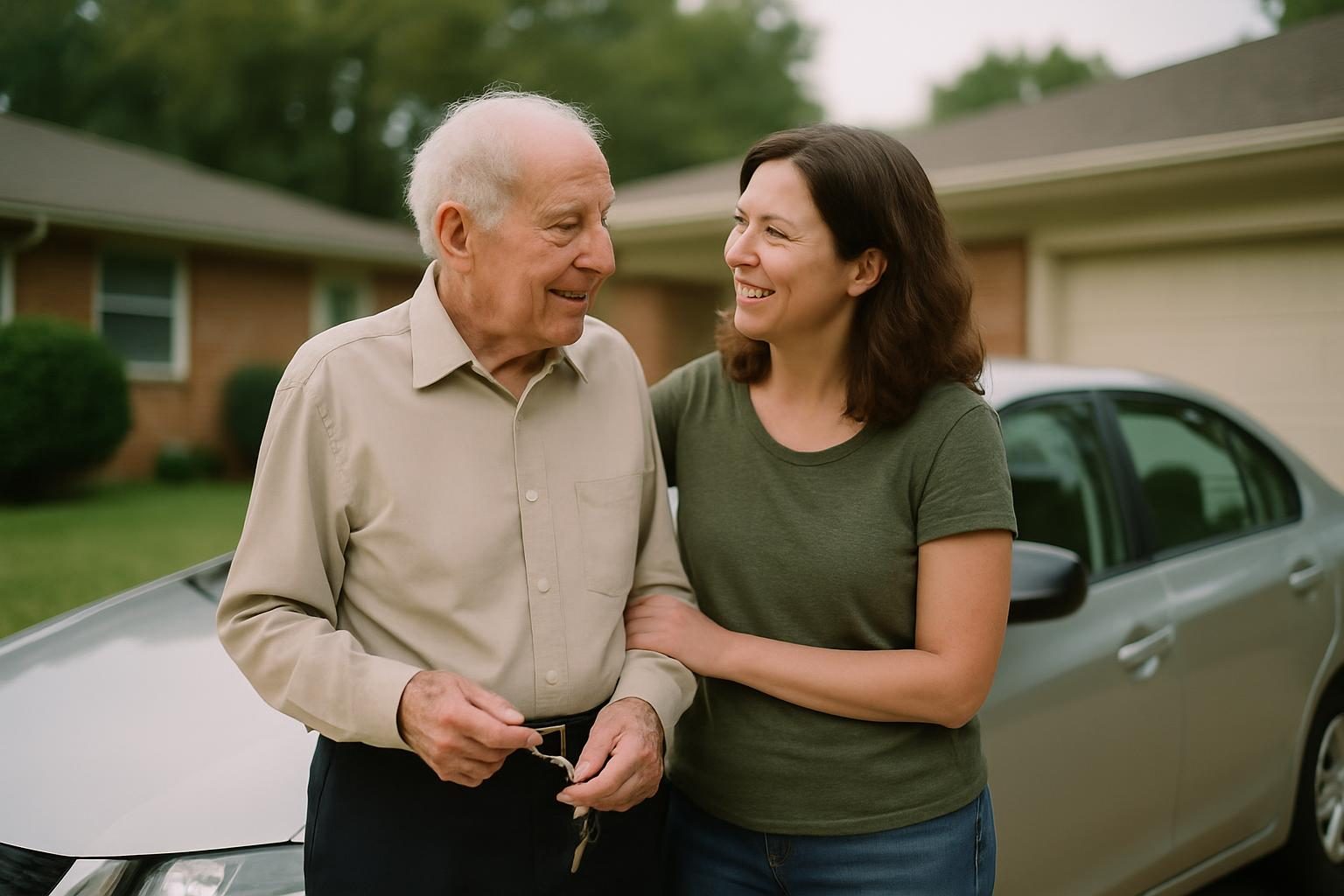
How to talk to a parent about giving up driving
For many older adults, driving means independence, so this is one of the hardest conversations families have. The goal is safety without taking away dignity. Federal highway safety guidance for families suggests three steps: collect information, develop a plan, and follow through. Waiting until there is a crash usually makes the talk more tense.
Warning signs to watch for
Ride along a few times and note specific examples:
- New dents or scrapes on the car, garage or mailbox.
- Getting lost on familiar routes.
- Drifting between lanes, hitting curbs, or stopping in odd places.
- Missing stop signs, signals or other cars, especially when turning left.
- Confusing the gas and brake pedals.
- Slower reaction time, trouble turning the head to check traffic.
- Near misses, traffic tickets, or other drivers honking often.
- Friends or neighbors saying they no longer ride with your parent.
Changes in vision, strength, reflexes and attention, plus some medications and conditions such as dementia, Parkinson's disease, stroke or macular degeneration, can all affect driving.
Ask about your situation
Type your question the way you'd say it. Free, no sign-up, and we never ask for your name.
Find licensed care near youHow to have the conversation
- Choose the right messenger. Sometimes a spouse, a sibling, or a trusted doctor is heard better than an adult child.
- Talk privately and calmly, not right after a scare or at a family gathering.
- Use "I" statements and facts: "I noticed you missed the stop sign on Elm Street twice this week. I'm worried about you."
- Listen. Ask what worries them about not driving.
- Offer steps, not just an ending: no night driving, no highways, shorter trips, or driving only in good weather.
- Bring the ride plan so the conversation is about how they'll keep going places.
If the first talk goes badly, stop and try again another day. Many families need several conversations over weeks or months. Keep the focus on the shared goal: your parent staying safe and independent for as long as possible.
Get an objective driving evaluation
A neutral assessment takes the argument out of the family:
- Doctor visit: ask the doctor to check vision, hearing, thinking, strength and medications and to talk about driving.
- Driver rehabilitation specialist: often an occupational therapist who does a clinical and on-road evaluation and may recommend vehicle equipment or training. Medicare usually does not pay for the on-road test.
- State DMV: most states have a medical review process, and many let family, doctors or police request a driver re-examination. Rules differ by state.
A driving evaluation can also lead to a middle path. Specialists sometimes recommend wider mirrors, pedal extensions, a car with better visibility, or a short refresher course, along with limits such as daytime-only driving close to home. Ask the evaluator to put recommendations in writing so the whole family is working from the same plan.
Plan rides before the keys go away
- Family and friend schedules for regular errands and appointments.
- Local senior transportation or volunteer driver programs, often arranged through the Area Agency on Aging.
- Public transit and ADA paratransit for people who can't use regular buses.
- Ride-hailing or taxi accounts set up on their phone or by phone call.
- Medicaid non-emergency medical transportation, for those who have Medicaid.
- Grocery and pharmacy delivery.
If your parent also needs help with errands at home, seniorcare.si can show licensed home care agencies near your ZIP code that provide companion and transportation help.
If your parent has dementia
Dementia gets worse over time, so driving ability will decline even if your parent seems fine today. Talk about driving early, while they can take part in the decision. If they refuse and are unsafe, families sometimes ask the doctor to report concerns to the DMV, keep the keys, or disable or sell the car. Safety comes first for your parent and everyone else on the road.
Common questions
At what age should seniors stop driving?
There is no set age. Driving safety depends on health, vision, thinking and reaction time, not age alone.
Can a doctor tell the DMV my parent shouldn't drive?
In many states, doctors may report medical concerns to the DMV, and a few states require it for certain conditions. Check your state's DMV medical review rules.
What if Dad refuses to stop driving?
Ask his doctor or a driver rehabilitation specialist to evaluate him, request a DMV re-examination if your state allows, and focus on keeping him connected with a ride plan.